Sintered Vents

  1. Home
  2. »
  3. Related Machining
  4. »
  5. Sintered Vents
Edit Content

Product Description

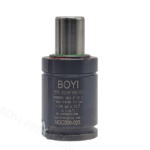
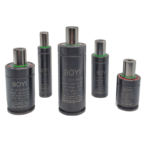
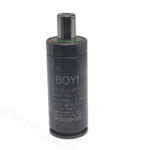
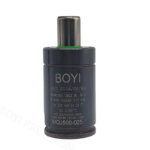
The nitrogen gas spring is a component with elastic function. It seals high-pressure nitrogen in a certain container. The external force compresses the nitrogen through the plunger rod. When the external force is removed, the high-pressure nitrogen expands to obtain a certain elastic pressure. Nitrogen gas spring can also be called nitrogen cylinder or nitrogen cylinder elastic device;Boyi has sufficient inventory to meet the immediate needs of the market and can provide non-standard customization of nitrogen gas springs according to customer needs.
Five Series Nitrogen Gas Spring Features ;

1.MQQ_Strong Type Nitrogen Gas Spring
(1)The MQQ nitrogen gas spring is a newly developed rod-sealed gas spring. It continues the characteristics of MQQH (extra-thin structure nitrogen gas spring) with large output force and small circumferential space occupation;
(2)The diameter of MQQ nitrogen gas spring is exactly the same as that of MQQH cylinder, and it occupies a smaller height space;
(3)MQQ nitrogen gas spring adopts the rod seal structure design, which makes it have better sealing and stability, and the design stroke is longer;
(4)MQQ nitrogen gas spring is generally used independently, it is very easy to install, and can also be connected into a system; so it is the best choice for designers when the circumferential (radial) space is restricted;

2.MQQH_Extra Thin Structure Type Nitrogen Gas Spring
(1)MQQH nitrogen gas spring is a rod-sealed type with a smaller outer diameter than the ultra-compact type, and the output force is very large;It is the designer’s first choice when the circumferential (radial) space is strictly limited;
(2)MQQH nitrogen gas springs are basically interchangeable with similar foreign products (Kaller gas springs, Dadco gas springs, Hyson gas springs, etc.);
(3)MQQH nitrogen gas springs are generally used independently and are very easy to install; they can also be connected into a system for use;
(4)MQQH nitrogen gas spring is an upgraded product of MQH, with a working stroke within 50mm,

3.MQC_Ultra-Compact Nitrogen Gas Spring
(1)MQC nitrogen gas spring is a newly developed type. It is the model with the shortest base length in the current nitrogen gas spring family. At the same time, it has a smaller outer diameter than the MQB type, so it has a small body and a large force; when the height and space of the mold design are When the circumferential (radial) space is strictly restricted at the same time, it is the first choice for mold designers;
(2)MQC series nitrogen gas springs are basically interchangeable with similar foreign products;
(3)MQC series nitrogen gas springs are generally used independently, and the installation is very simple;
(4)When the working stroke requirements are not too long, the performance in all aspects is as good as the MQB-ISO standard type;

4.MQJ_Short Nitrogen Gas Spring
(1)MQJ short type nitrogen gas spring is a type that is popular among mold designers. It has a shorter base length than MQB, so the total length can reduce the design height of the mold. It is the first choice for mold special nitrogen gas springs;
(2)MQJ nitrogen gas spring is basically interchangeable with similar foreign products;
(3)MQJ nitrogen gas spring is usually used independently in the mold, and it is very easy to install. It can also be connected into a system when the spring pressure is 5000N;
(4)When the working stroke requirements are not too long, the performance in all aspects is as good as the MQB-ISO standard type;

5.MQB-ISO International Standard Nitrogen Gas Spring
(1)MQB nitrogen gas spring is the most commonly used typical type. All technical parameters comply with the ISO11901 gas spring international standard; it also complies with the gas spring standards of FORD-WDX3560 (Ford), GM-M150 (General) and Renault (Renault);
(2)MQB nitrogen gas springs are completely interchangeable with similar foreign products, such as Swedish Kaller, American Dadco and Hyson;
(3)It is usually connected to a system for use, and it is very convenient to set the pressure; it can also be used independently;
(4)MQB nitrogen gas spring shows very good stability regardless of the length of the working stroke;

Our Advantages

1. Adopt advanced QPQ surface treatment technology;
2. The surface roughness of the piston rod is Ra0.02;
3. The hardness of the piston rod surface is 1200HV;
4. It can be interchanged with global brand nitrogen gas spring specifications;
5. Guarantee the service life of more than 1 million times;
6.100% imported sealing parts;
7. Unique explosion-proof safety design-patented product;

DOWNLOAD&VIEW

Professional Question

The problems that should be paid attention to when choosing nitrogen gas spring in mold design:


1. What form of nitrogen gas spring should be selected to meet the requirements of the stamping process? To solve such problems, it is usually necessary to consider the spring pressure, stroke, number of nitrogen springs, and boost ratio of the nitrogen springs.
A. Selection of spring pressure: According to the calculated punching pressure, select the number, model and spring pressure of each nitrogen spring. Generally speaking, the elastic pressure of the nitrogen gas spring should be selected according to the calculated pressing force plus an increase of 15%-20%, which is more in line with the actual situation.

Because first, when the mold wears out, there will be gap changes. Changes in process parameters such as cutting edge dullness, inconsistency of mold thickness and mold plate deformation resistance will cause changes in the deformation resistance of the workpiece, so the deformation resistance should be left in the design. Second, when the nitrogen gas spring is inflated, the high-pressure gas will inevitably have throttling loss, which will cause the elastic force to float down. Third, the life of the nitrogen gas spring is very long. After a period of use, the high-pressure nitrogen will leak to a certain extent, causing the pressure to drop slightly.

B. The selection of the number of nitrogen gas springs: it should be based on the needs of the line, combined with the mold structure and the placement of the focus point, so that the mold will not be unbalanced when it is working, and it must be convenient to adjust the mold. In this way, the nitrogen gas spring can have a sufficient life span in use.

C. Selection of the boost ratio of the nitrogen spring: The model of the nitrogen spring can be selected and determined according to the characteristic curve of the nitrogen spring and the requirements of the stamping process. Especially when the working force is required to change steadily, or the working force is basically constant and the initial force is large, it is more important to determine the boost ratio.
D. Selection of nitrogen spring stroke: no matter which process and when selecting nitrogen spring, we always hope that the total height of the nitrogen spring should not be too high, so as to avoid instability and the structure is too complicated when installed on the mold, and the stroke is larger The higher the price of nitrogen gas springs, this is particularly important for independent nitrogen gas springs. If the stroke is really large due to process requirements, it is recommended to use the nitrogen spring seat plate system, which can reduce the height of the mold and improve the stability and reliability of the nitrogen spring. Sometimes in order to be safe and avoid accidents, when choosing a nitrogen gas spring, it is necessary to increase the safety stroke of 3-5mm.

2. Selection of nitrogen gas spring structure:
When a designer uses a nitrogen gas spring in a mold, he first needs to determine its structural form, according to the stamping process requirements of the required parts, and comprehensively consider factors such as the mold structure, use equipment, working environment, working conditions, mold cost, adjustment and maintenance, etc. .

A. Independent: The most widely used one is the independent nitrogen gas spring. It occupies a relatively small mold space, is convenient and flexible to install and fasten, has a variety of structural forms, and has several different installation forms without any accessories. It can be used directly in the mold. It is popular among mold designers and is the preferred design form of today’s designers.
B. Pipeline connection type: Pipeline connection type is generally used in large stamping parts and large covering parts. It uses a high-pressure tube to connect the individual nitrogen springs together, and then installs a control instrument to make the spring pressures of the nitrogen springs of the entire system equal, so that the entire system is integrated, equivalent to an independent nitrogen spring. In this way, a greater balance of elastic force and elastic force transmission is obtained, the life of the mold is improved, and the quality of stamping parts is guaranteed.

Installation and use:
The special nitrogen gas spring for the mold is a high-pressure sealing product. It has undergone strict inspection and testing before leaving the factory, and no gas leakage is allowed. Therefore, the user is required to install and use it correctly to ensure its safety, reliability and best service life.


1. When the special nitrogen gas spring for the mold is used as an independent part, after being installed in the mold, there is generally no need for disassembly and maintenance within the service life.

2. If the nitrogen gas spring is connected as a system, it generally needs to be guided by specially trained personnel or professionals. Special attention should be paid to disassembly or maintenance before the nitrogen in the cylinder is completely released to prevent accidents.

3. The screws at the lower end of the special nitrogen gas spring for the mold mainly play the role of protection and strengthening of the seal, and shall not be disassembled or knocked at will.

4. Recommended working stroke≤0.9×S (manufacturing stroke).

5. The non-perpendicularity between the contact surface of the workpiece pressed by the upper end of the piston rod and the axis of the piston rod should be ≤1° (that is, it should be kept vertical, and partial load is strictly prohibited).

6. The movement direction of the workpiece pressed by the upper end of the piston rod must be parallel to the movement direction of the piston rod.

7. After the nitrogen gas spring is compressed, do not allow the piston rod to return freely to avoid internal damage to the gas spring.

8. Pay attention to keep the cylindrical surface of the piston rod clean, be careful of scratches, and never knock and collide.

9. It is strictly forbidden to put the nitrogen gas spring in the environment of hot sun and high heat source, the maximum allowable temperature is +80℃. (Exception for special high temperature resistant nitrogen gas spring)

10. Nitrogen gas springs for molds should be stored in a dry, ventilated, non-corrosive gas environment, packaged and stored; after unpacking and installation, if they are not used for a long time, grease can be applied to the outer surface to protect against corrosion.

The working process of nitrogen gas spring using nitrogen as the working medium can be approximately regarded as isothermal expansion and compression process, so it must follow the Boyle-Mariotte gas state equation.


PV/T=C, P1×V1=P2×V2

It should be noted that in addition to theoretical calculations, the structural design and sealing technology of the nitrogen cylinder are the key technologies for the success or failure of the nitrogen spring. Judging from the current domestic and foreign products, the structure of nitrogen gas springs can generally be divided into two types: piston type and plunger type, adopting a single-cavity or multiple-cavity air chamber structure, and the air chamber design is mostly a back pressure structure. On the whole, nitrogen gas springs can be divided into two types: independent and non-independent. The structure of the movable part and the non-movable part, the design of inflation, gas distribution structure, and form are all related to the manufacturing process technology, and the application of new materials, new processes, and new technologies. The degree of application of these new technologies is all It will directly affect the technical performance indicators of the nitrogen gas spring and the quality of the gas spring. In this sense, the nitrogen gas spring is a product that integrates the application of various new technologies.

The form and technology of gas sealing is a complicated task. The sealing of high-pressure gas is even more complicated. High-pressure gas must not only be sealed well for a long time, but also work under this pressure. Sometimes the pressure increase ratio is as high as 1.6-2.0, so the high pressure The long-term sealing of gas is much more difficult than the sealing of high-pressure liquid. It is a comprehensive technology. Among them are the sealing structure, the path and form of static and dynamic sealing, the manufacturing precision of movement, and the rough surface. Degree, surface treatment technology, selection of sealing materials, sealing reliability and life, etc.

Key Points and Structural Analysis of Reliability Design of Nitrogen Spring Seal


In order to ensure the service life of the nitrogen cylinder spring, the key technical issues of the nitrogen cylinder design are explained, and the key points of the seal reliability design of the high-pressure nitrogen cylinder and the dynamic seal structure suitable for the nitrogen spring are proposed. Specifically, it is divided into three main points: nitrogen spring seal reliability design points and structure, dynamic seal reliability design points, and nitrogen spring sealing elements and structure.

The continuous development of mold technology has put forward higher and higher requirements for the elastic components used in large quantities on the mold. In the field of automobile manufacturing, the cover mold requires the elastic element to generate a larger initial elastic force in a small space without pre-tensioning, and the elastic force is required to be basically constant throughout the working stroke. The elastic pressure characteristic curve of the conventional spring cannot meet the requirements, and the nitrogen cylinder spring emerged as a new type of elastic functional component. Its elastic pressure characteristic curve makes up for the deficiency of the conventional elastic element. The working pressure of the nitrogen cylinder spring is below 15MPa. Under normal use, its life index should reach the working stroke of 80km100km. For this reason, the sealing life of the high-pressure nitrogen of the nitrogen cylinder should be guaranteed first. The sealing of nitrogen gas springs is divided into dynamic sealing and static sealing. Compared with dynamic sealing technology, static sealing technology is more mature and reliable. However, high-pressure gas dynamic sealing of reciprocating shaft still has some technical problems worth studying. Therefore, the dynamic seal reliability of high-pressure nitrogen is a key issue for the success or failure of nitrogen springs.

1. Sealing element and structure
(a) O-ring seal is the simplest and most versatile seal type. It relies on the pressure of the sealing contact surface to block gas leakage. The higher the pressure, the better the sealing effect, but when the plunger or piston moves at a higher speed, the gas will leak. O-rings are generally made of synthetic rubber. Its movement friction resistance is smaller than that of lip seals, while the starting friction resistance is larger (3-4 times the movement friction resistance). The greater the hardness of the ring, the greater the roughness of the sliding surface, and the greater the starting friction; when the standing time is longer, the starting friction will increase. When o-rings are used for air sealing, lubrication measures must be taken to reduce the wear of the sealing ring. To prevent under high pressure. The ring is squeezed into the sealing gap and twisting occurs when it moves. In the design, a retaining ring is added to the side of the low pressure. Double retaining rings can also be used to prevent the return stroke from being squeezed and jammed. The O-ring seal is often used as an auxiliary sealing element, and can also be used as a main seal alone.

(b) Y-shaped combined seal is composed of Y-shaped sealing ring and lip. A one-way seal formed by a combination of ring, and its sealing principle is the same as that of a general Y-shaped sealing ring. The o-ring is made of synthetic rubber with strong deformability, while the Y-shaped seal is made of rubber with better rigidity, which can also expand radially under pressure. From the sealing effect. This structure not only maintains excellent sealing performance, but also reduces friction and wear, and at the same time avoids the possibility of a single Y-shaped sealing ring being squeezed into the gap and damaged during operation.

(c) Y-ring seal is one of the earliest structural forms of self-tightening lip seals. The sealing effect of nitrogen gas spring with unequal height lip Y-ring is better. Under normal circumstances, the Y-shaped ring can be directly installed in the installation groove without the support ring. When the working air pressure is applied, the bottom of the Y-shaped ring is axially compressed, and the lip is compressed in the circumferential direction, so that the lip and the cylinder wall contact surface Wider, the contact pressure increases at the same time, and acts as a self-tightening seal. The higher the contact pressure, the better the sealing performance. The Y-shaped seal has low friction resistance, stable movement, good pressure resistance and sealing performance. It can be sealed by a single ring, and is mainly used for sealing occasions that require low friction reciprocating motion. However, the Y-ring seal will produce greater friction and wear under high pressure, and the heel of the sealing element is prone to abrasive wear and bite, and it is also easy to squeeze into the gap to be damaged. Measures can be taken. Use a built-in back support ring to form a combined Y-shaped sealing ring to solve the problem. In order to improve the ability to resist deformation, the wall thickness of the section should be increased during design.

Nitrogen gas spring for molds (referred to as die gas spring or nitrogen gas spring or nitrogen cylinder or nitrogen cylinder) is a new type of elastic component that uses high-pressure nitrogen as the working medium. It is small in size, large in elasticity, long in stroke, stable in work, precise in manufacturing, and used Long life (one million times), flat elastic curve, and no need for pre-tensioning, etc. It has metal springs, rubber and air cushions and other conventional elastic components that are difficult to complete. It simplifies mold design and manufacturing, and facilitates mold installation and adjustment. Extend the service life of the mold and ensure the stability of the product quality. It can also be designed as a nitrogen spring system. As part of the mold, it can easily achieve constant pressure and delayed action in the system. It is a new type of flexible performance. The most ideal elastic component of a generation.
Edit Content

Product Description

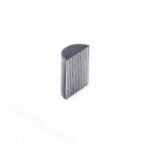
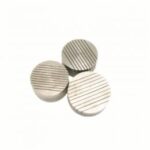
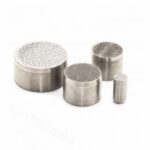
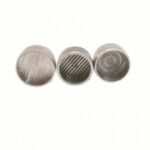
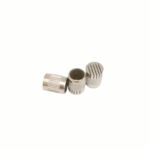
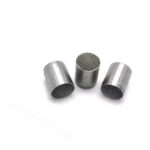
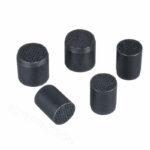
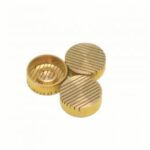
The mold sintered vents are used to vent air and other impurities during mold casting in order to improve the mold quality. It is widely used in mold castings of different types, including injection molds, gravity-casting molds and vacuum pressing and casting molds as well as low pressure casting molds.

Parameters

Materials
Stainless steel(SUS304,SUS316), customizable
Outer Diameter
4-30mm
Length
10mm
Diameter of the hole
0.1-0.5mm
We can customize with magnetic Sintered Vents or normal Sintered Vents (sintered exhaust plugs) of different materials and sizes according to customer needs.

Features

  1. This vent type features a high resistance to thermal impacts and features a long service life.
  2. With a superior corrosion resistance, it is easy to clean and replace.
  3. The ventilation effect is better due to an increase of 10-20% more pores when compared to a common air release plug.
  4. The damage to machined components is reduced due to the use of stainless steel material with a high hardness.
  5. The outside diameter of our products has a wide range of 4mm-30mm, though we can customize this to any specification needed.
  6. The gas venting resistance is significantly reduced due to the smooth vent pores made of stainless steel.The air permeability is 5-10 times that of a common air release plug.

DOWNLOAD&VIEW

Professional Question

TypeOutside Diameter/mmHeight/mmPore Diameter/mmPore Number
BY0310053.04100.59
BY0410054.04100.516
BY0510055.04100.524
BY0610056.04100.537
BY0810058.04100.569
BY10100510.04100.5121
BY12100512.04100.5177
BY14100514.04100.5241
BY161005/16150516.0410&150.5293
BY18100518.04100.5301
BY201005/20150520.0410&150.5349
NOTETolerance (OD Diameter) : ±0.02 (Height Diameter) :±0.2
TypeOutside Diameter/mmHeight/mmPore Diameter/mmPore Number
BY0410034.04100.324
BY0510035.04100.337
BY0610036.04100.352
BY0810038.04100.3109
BY10100310.04100.3148
BY12100312.04100.3221
BY141003/14150314.0410&150.3261
BY161003/16150316.0410&150.3333
BY18100318.04100.3385
BY20100320.04100.3481
NOTETolerance (OD Diameter) : ±0.02 (Height Diameter) :±0.2
TypeOutside Diameter/mmHeight/mmPore Diameter/mmPore Number
BY0310023.04100.221
BY0410024.04100.237
BY0510025.04100.261
BY0610026.04100.289
BY0810028.04100.2157
BY10100210.04100.2177
BY12100212.04100.2261
BY16100216.04100.2423
NOTE:Tolerance (OD Diameter) : ±0.02, (Height Diameter) :±0.2
Edit Content

Start Your Project With A Free Quote

Edit Content
en_USEnglish